A&P is less about being clever and more about keeping a lot of detail straight. These guides walk through the body's systems and processes step by step, with memory strategies that actually stick.
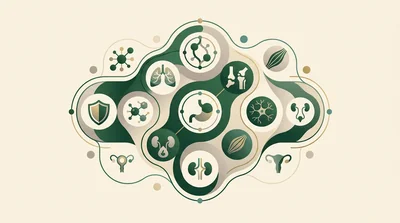
How to organize the 11 body systems into four clusters, give each one a clear job, and stop confusing the pairs that overlap.
Group the skeleton into axial and appendicular, learn each region in anatomical order, and use retrieval drills to make 206 bones stick.
An action potential explained as a sequence of ion movements: resting potential, threshold, depolarization, repolarization, and the refractory period.
One heartbeat broken into four phases, with the single pressure rule that makes every valve movement in the cardiac cycle predictable.
McGraw-Hill Biology SmartBook Answers
Negative vs. positive feedback explained by direction, not value: one loop reverses a change, the other amplifies it. With real body examples.
How the nephron filters blood in three ordered steps — filtration, reabsorption, and secretion — and what each step moves and where.
Sliding filament theory made clear: muscle shortens because actin and myosin filaments slide past each other, driven by the cross-bridge cycle.
10 McGraw-Hill SmartBook & Connect Tips
Learn anatomical directional terms in opposite pairs, anchored to anatomical position, so superior, distal, and medial finally make sense.
The endocrine system organized gland by gland: which gland makes which hormone, what it does, and the feedback loop that keeps levels in check.
How to study for an A&P exam by treating it as two subjects — memorize the anatomy, learn the physiology as mechanisms, and prep the lab practical.
Does McGraw-Hill Connect Record You?
A nervous system overview that organizes the topic by division: CNS vs. PNS, somatic vs. autonomic, sympathetic vs. parasympathetic, and the three neuron types.
The respiratory system explained as three separate jobs: ventilation moves air, gas exchange happens at the alveoli, and gas transport carries O2 and CO2 in blood.
A walkthrough of the digestive system organ by organ — mouth, stomach, small intestine, large intestine — with the enzymes and absorption sites named at each step.
Mastering McGraw-Hill Concepts
The circulatory system explained as two loops sharing one pump — pulmonary and systemic — with one red blood cell traced from foot to foot.
Two defenses on one drainage network: the lymphatic system returns interstitial fluid, while innate and adaptive immunity meet pathogens at lymph nodes along the way.
The integumentary system layer by layer: the epidermis is the waterproof barrier, the dermis does the actual work, and the hypodermis insulates and anchors.
Work Through McGraw-Hill Faster
A muscular system overview that compares skeletal, smooth, and cardiac muscle by structure and control, then walks through how skeletal muscle is organized fiber by fiber.
The female and male reproductive systems compared part by part — same plan, same four hormones, with one cyclic output and one steady-state output.
The five functions of the skeletal system — support, protection, movement, blood cell formation, and mineral storage — each mapped to specific bone tissue.
McGraw-Hill Anatomy & Physiology Answers
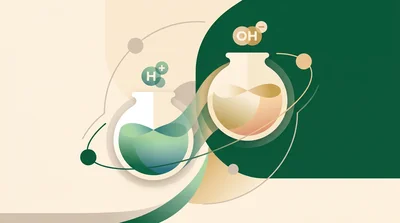
How the body holds blood pH inside 7.35–7.45: chemical buffers work in seconds, the lungs respond in minutes, and the kidneys finish the job over hours to days.
Fluid and electrolyte balance explained by compartment: sodium and chloride dominate ECF, potassium and phosphate dominate ICF, and three hormones manage the system.
Autonomic vs. somatic nervous system compared by four clean differences: target tissue, conscious control, number of neurons, and neurotransmitter at the target.
McGraw-Hill Biology Connect Answers
Blood types and Rh factor: ABO antigens, the Rh-D antigen, why O-negative is the universal donor, and how a mismatched transfusion triggers a hemolytic reaction.
The menstrual cycle explained as two parallel cycles: the ovarian cycle and the uterine cycle, aligned day by day with the four hormones that drive them.
Cell membrane transport sorted by one question — ATP or no ATP: passive transport moves substances down a gradient; active transport moves them up and pays for it.