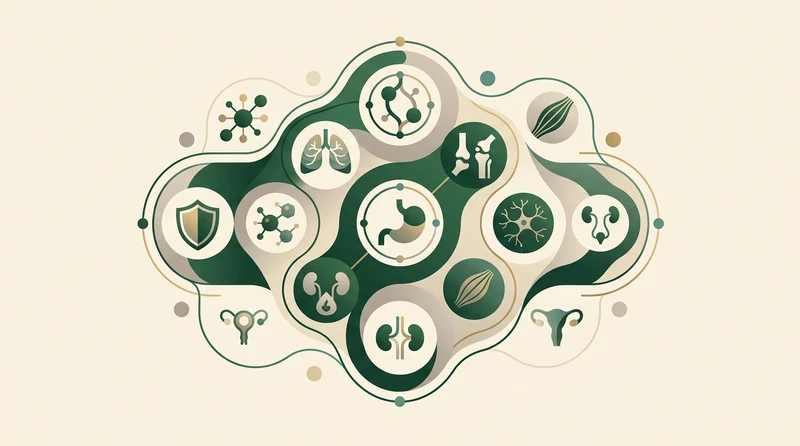
Most anatomy courses open with a list of the 11 body systems, and within a week students are mixing them up — endocrine with nervous, lymphatic with cardiovascular, integumentary with anything. The problem is rarely the list itself. It is that the systems share organs and overlap in function, so memorizing them as eleven separate boxes does not hold up. This overview gives each system one clear job, names its key organs, and points out exactly where the look-alikes diverge.
Why the 11 Systems Overlap (and Why That Is Fine)
The body is not actually divided into eleven sealed compartments. The systems are a teaching framework — a way to group organs by the main task they accomplish together. One organ can belong to two systems: the pancreas is part of the digestive system (it releases enzymes into the small intestine) and the endocrine system (it releases insulin into the blood). The pharynx carries both air and food, so it is shared by the respiratory and digestive systems.
So when two systems seem to blur, that is expected. The fix is not to force them apart but to ask one question: what is this system's primary output? Digestion's output is absorbed nutrients. Respiration's output is gas exchange. Once you anchor each system to its output, the shared organs stop being confusing.
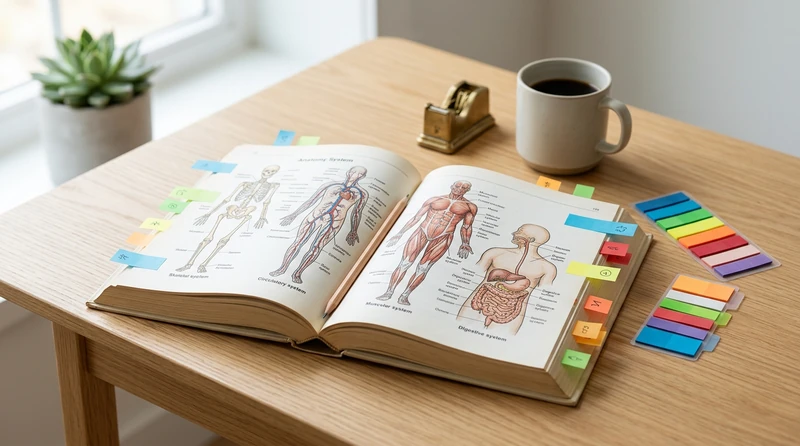
The Systems Grouped by Function
Eleven is easier to hold in your head as four functional clusters.
Support and movement
- Integumentary system — skin, hair, nails, and glands. It is the body's outer barrier: it blocks pathogens, prevents water loss, regulates temperature through sweat, and synthesizes vitamin D.
- Skeletal system — 206 bones, cartilage, and ligaments. It provides the rigid framework, protects organs (skull, ribcage), stores calcium, and produces blood cells in red bone marrow.
- Muscular system — skeletal muscle specifically. It moves the skeleton, maintains posture, and generates heat. (Cardiac and smooth muscle exist but belong functionally with the heart and hollow organs.)
Communication and control
- Nervous system — brain, spinal cord, and nerves. It is the body's fast control system, sending electrical signals in milliseconds to coordinate immediate responses.
- Endocrine system — glands such as the thyroid, adrenals, and pituitary. It is the body's slow control system, releasing hormones into the blood for effects that last minutes to days.
Transport and defense
- Cardiovascular system — heart, blood, and blood vessels. It pumps blood to carry oxygen, nutrients, hormones, and waste.
- Lymphatic system — lymph vessels, lymph nodes, spleen, and thymus. It returns leaked fluid to the bloodstream and houses much of the immune response.
- Respiratory system — lungs, trachea, and airways. It exchanges oxygen and carbon dioxide between air and blood.
Processing and continuation
- Digestive system — mouth, stomach, intestines, liver, and pancreas. It breaks food into absorbable nutrients and eliminates solid waste.
- Urinary system — kidneys, ureters, bladder, and urethra. It filters blood, removes nitrogenous waste, and balances water and electrolytes.
- Reproductive system — gonads and associated organs. It produces gametes and, in females, supports a developing fetus.
The Pairs Students Confuse Most
A few specific mix-ups account for most lost exam points.
Nervous vs. endocrine. Both are control systems, so the distinction is speed and method. The nervous system uses electrical impulses along neurons for rapid, short-lived, targeted responses. The endocrine system uses chemical hormones in the bloodstream for slower, longer-lasting, widespread responses. Pulling your hand from a hot stove is nervous; the days-long stress response is endocrine.
Cardiovascular vs. lymphatic. Both move fluid, but in opposite directions and roles. The cardiovascular system is a closed loop that pumps blood. The lymphatic system is a one-way drainage network: it collects fluid that has leaked out of capillaries into tissues and returns it to the bloodstream, filtering it through lymph nodes on the way.
Urinary vs. digestive. Both eliminate waste, but different waste. The digestive system eliminates undigested food as feces — material that never entered the blood. The urinary system eliminates metabolic waste from the blood, mainly urea, as urine. One handles leftovers; the other handles byproducts of cells doing their work.
Skeletal vs. muscular. They are anatomically intertwined but functionally distinct: bones provide the lever and the muscle provides the force. Tendons connect muscle to bone; ligaments connect bone to bone. Mislabeling those connectors is a classic error.
How the Systems Work Together
No system runs alone. A single act of climbing stairs uses the muscular system to move, the skeletal system as the lever, the respiratory system to take in oxygen, the cardiovascular system to deliver it, the nervous system to coordinate the motion, and the endocrine system to mobilize fuel. Homeostasis — the body's stable internal state — is a team effort across all eleven systems. Seeing the systems as collaborators rather than rivals is what makes the framework click. To see this teamwork in detail, the article on negative vs. positive feedback shows how systems coordinate to hold conditions steady.
Getting Help
A solid mental map of the 11 body systems makes every later anatomy topic easier, because each new structure slots into a system you already understand. When you reach the trickier mechanisms, the endocrine system and its hormones is a good next stop, since it is the system students most often want to revisit.
Conclusion
The 11 body systems are not eleven isolated facts to memorize — they are a functional map. Group them into four clusters, give each system one clear primary output, and learn the four or five confusable pairs by what makes them differ. Do that, and the overlap that trips most students up becomes the thing that ties the whole framework together.